
The Wider Human Story of Guantánamo
Guantanamo DiaryThis flow follows Slahi’s movement from seeing himself as an isolated suspect to recognizing a community of detainees and the human relationships inside the camp.
increasing Bearing strength in each event
 decreasing
Bearing strength in each eventdecreasingOther Prisoners in Bagram

Recognition Among Detainees
Behind the Wire
After a period of isolation, Slahi was moved near other prisoners in Bagram. They could see or hear one another despite strict rules against communication.
Shared Suffering
He witnessed hunger strikes, force-feeding, beatings, and punishment of men who were confused or ill. The sight of other detainees’ suffering disturbed him as much as his own treatment.
A Makeshift Community
Prisoners passed information and comfort through brief exchanges. Their shared vulnerability made human presence a source of relief in a system designed to separate them.
The First Guantánamo Neighbors
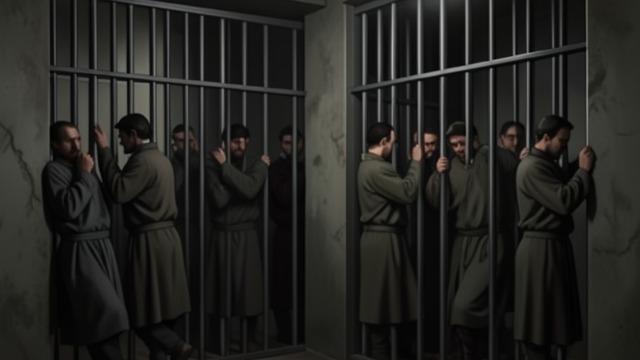
Companionship After Transfer
Thirty-Four Others
Slahi arrived in Guantánamo with thirty-four detainees after an exhausting transfer. In the initial isolation block, prisoners could hear one another and exchange greetings through the cells.
Stories Shared
They compared journeys, injuries, and fears, and Slahi found comfort in learning that others had survived similarly harsh treatment. Their stories were varied, but each challenged the idea that all detainees were powerful or dangerous figures.
Separation Hurts Again
When the group was later moved apart, some detainees cried, including Slahi. The attachment formed quickly because companionship had been rare and hard-won.
A Hunger Strike

Refusal as Collective Speech
Protest in the Block
Slahi joined other detainees in a hunger strike over detention conditions and the absence of due process. The protest gave prisoners a way to act together when ordinary communication and legal recourse were limited.
Physical Limits
He lasted only four days before becoming too weak to continue. His decision reflected both solidarity with others and awareness of his own physical vulnerability.
No Quick Remedy
The protest did not produce a prompt resolution. The detainees’ willingness to risk their health showed how deeply indefinite detention had eroded hope in ordinary channels.
A Neighbor in Camp Echo

Company in Isolation
A Nearby Detainee
Slahi was eventually allowed limited contact with Tariq al-Sawah, a fellow detainee who lived in the neighboring hut. Their meetings offered a rare chance to speak with someone who understood the camp from within.
Mistrust and Candor
Both men were wary that they might be encouraged to gather information about each other. Slahi told his neighbor to speak only about what felt safe, while insisting that he had nothing to hide.
Human Contact Returns
The relationship did not remove suspicion or detention, but it made isolation less absolute. Companionship gave each man a small measure of recognition and shared time.
The Detainees’ Unfinished Future

Concern Beyond the Cell
Watching Others Struggle
Slahi wrote about detainees losing hope, suffering mental deterioration, and joining hunger strikes. He feared that some would experience lasting harm even if they later stopped refusing food.
A Shared Demand
He argued that the government’s obligation was not to invent a technical fix but to explain its case and release people it could not lawfully hold. The argument grew from his own experience but included the wider prison population.
A Community Still Waiting
At the memoir’s end, detainees remained caught between their bodies’ limits and a system that offered no clear resolution. Slahi’s concern for them made his story a collective account as well as an individual one.
July–August 2002
August–September 2002
September 2002
2004–2005
2005–the memoir’s present
